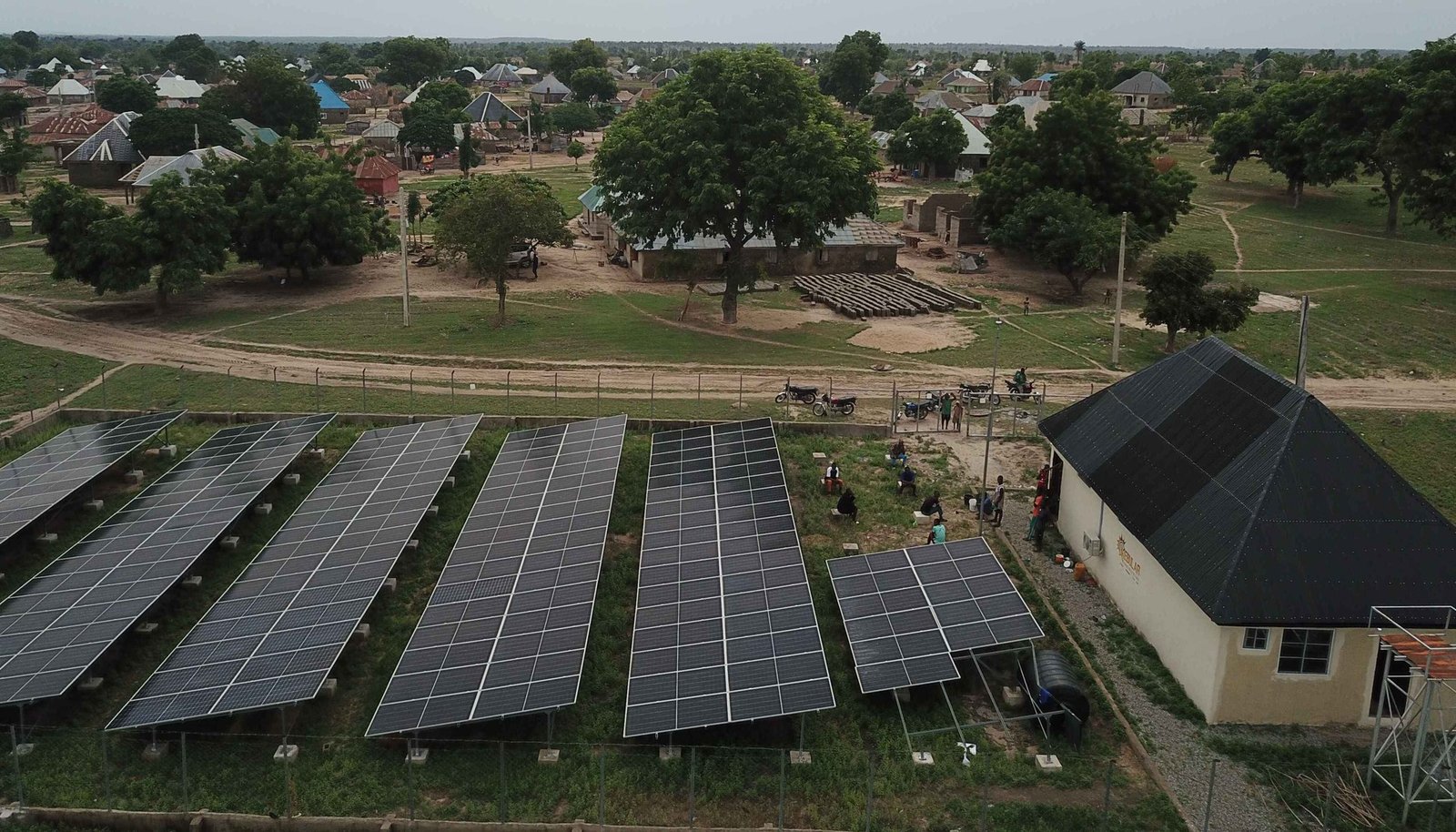

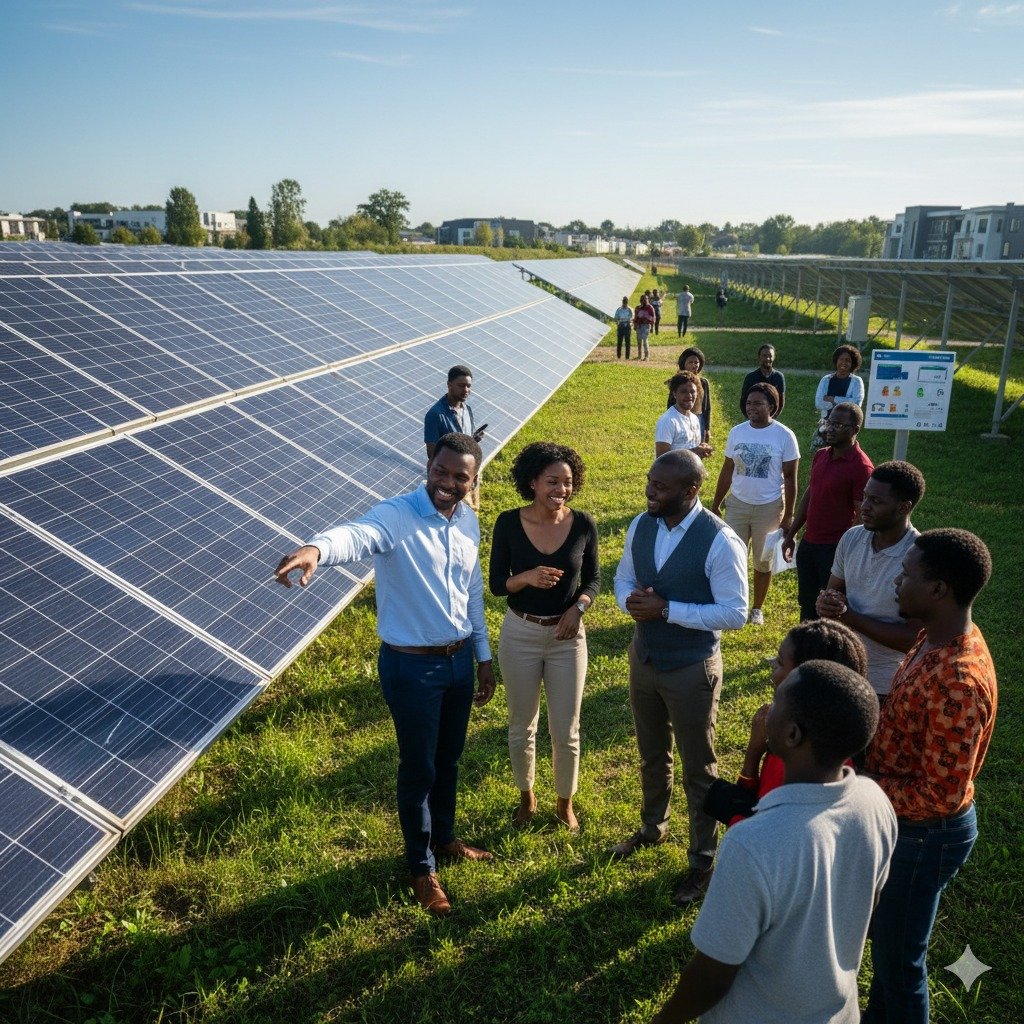
Community solar projects are an innovative approach to expanding access to renewable energy, especially for individuals and businesses that cannot install solar panels on their own properties. Instead of placing panels on individual rooftops, a community solar project consists of a shared solar array—often located on a large plot of land or a suitable rooftop—whose generated electricity is distributed among multiple subscribers. Participants typically receive credits on their electricity bills for the power produced by their share of the project, making solar energy more inclusive and flexible.
One of the greatest benefits of community solar is accessibility. Renters, apartment dwellers, homeowners with shaded roofs, or those living in buildings with structural limitations can all participate without making changes to their property. This model removes common barriers such as high upfront installation costs and long-term maintenance responsibilities, allowing a broader segment of the population to benefit from clean energy.
Community solar projects also deliver economic advantages to local communities. They can create jobs during the development, installation, and maintenance phases, supporting local contractors and skilled labor. In many cases, subscribers save money on their electricity bills compared to standard utility rates, while communities benefit from increased energy independence and protection against fluctuating fossil fuel prices.
From an environmental perspective, community solar plays a key role in reducing greenhouse gas emissions and reliance on non-renewable energy sources. By generating electricity from the sun, these projects help lower carbon footprints at a collective level. Even small individual subscriptions can add up to significant environmental impact when many participants are involved, accelerating the transition to a cleaner energy mix.
Another important aspect of community solar is social equity. Many programs are designed to include low- and moderate-income households by offering discounted subscription rates or prioritizing their participation. This ensures that the benefits of renewable energy are not limited to higher-income groups, but are shared more fairly across different socioeconomic segments of society.
As energy systems continue to evolve, community solar projects are expected to play an increasingly important role in sustainable development. They bridge the gap between individual solar ownership and large-scale utility projects, offering a practical, scalable solution for clean energy adoption. By combining environmental responsibility, economic opportunity, and social inclusion, community solar represents a powerful model for the future of renewable energy.